SPECIMEN #004: Felis fraudator (The Kittysupps Grifter)
- Classification: Fear Merchant / Pseudoveterinary Influencer / Facebook Algorithm Parasite
- Habitat: Social media ad feeds, "sponsored content" slots, anxious cat-owner Facebook groups
- Diet: Feline anxiety, disposable income, and the human conviction that someone knows a terrible secret about your pet's food
- Threat Level: To your wallet, your peace of mind, and possibly your cat's actual health (via delayed proper care)
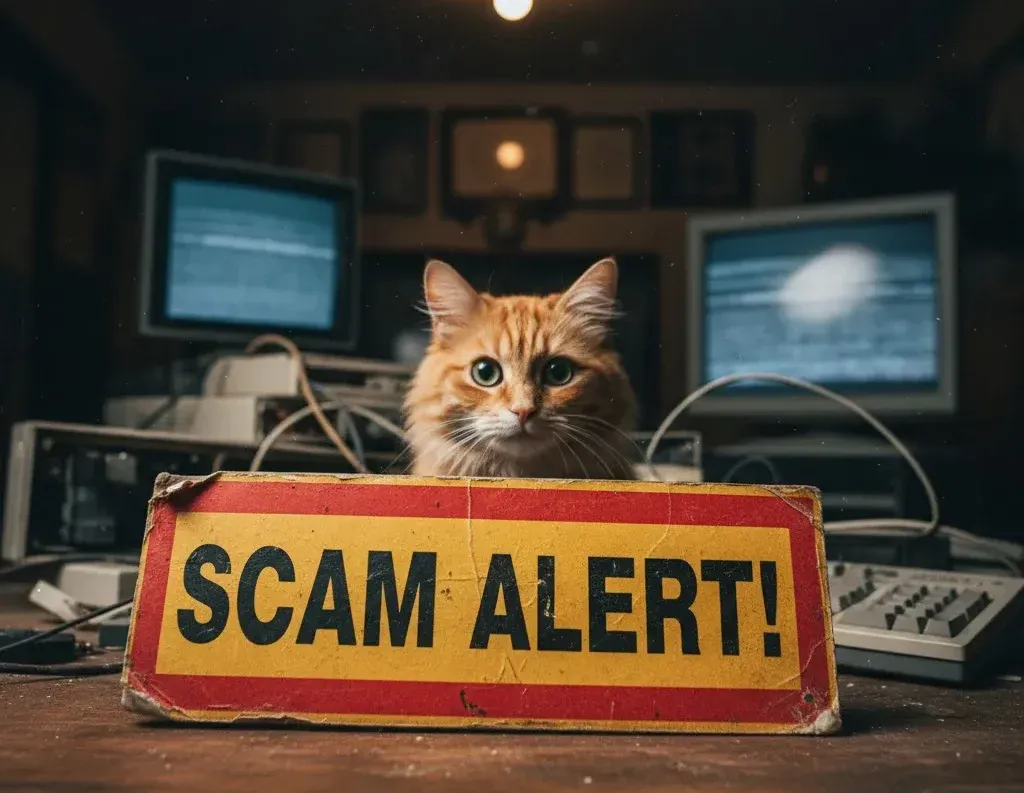
There's a new kind of poison circulating on Facebook.
It's not in the kibble. It's not in the water bowl. It's in the ads that appear between your cousin's baby photos and golden retriever videos.
They're selling Kittysupps - a taurine supplement in a jar for £29.99 plus shipping. Taurine is cheap and widely available. Before you've finished reading, you're likely signed up for a subscription.
But they're not really selling taurine.
They're selling a script. And the script is designed to make you feel like a negligent criminal.
The Script
A man in a white coat appears, looking suitably grave. He presents as a whistleblower vet who "can't stay silent any longer." Commercial pet food, he warns, is killing cats. Specifically, 77% of cats are taurine deficient. Your vet doesn't want you to know. The real culprit? Peas. Lentils. Chickpeas. These legumes are blocking taurine absorption.
Your cat is in danger. And you're the reason, unless you buy the jar.
None of this is true. Not the statistic, not the mechanism, not the conspiracy, not the urgency.
The "77% Deficient" Lie
Seventy-seven percent is specific enough to sound researched, but vague enough to evade immediate scepticism. No such study exists. No peer-reviewed veterinary paper supports it.
In reality, taurine deficiency is vanishingly rare in cats fed commercial foods that meet AAFCO or FEDIAF standards. Those standards were updated decades ago precisely to prevent the dilated cardiomyopathy issues seen in the past. Deficiency still occurs, usually with unbalanced home-cooked diets or cats fed dog food, but not in properly formulated commercial cat food.
The ad isn't targeting people already home-cooking. It's targeting ordinary owners who buy decent kibble and love their cats enough to worry.
"Peas Block Taurine": Pure Fantasy
There is no established biochemical mechanism by which peas, lentils or chickpeas block taurine absorption in cats. This is not a debated topic in veterinary nutrition. It is marketing fiction.
Taurine is an amino acid cats cannot synthesise well; they get it from animal tissue. Legumes simply sit there being legumes. The claim twists genuine past concerns about diet formulation into a weapon against plant ingredients so they can sell you expensive powder.
The Fake Vet and the Guilt Machine
The man in the white coat is an actor. You can find his face on stock footage sites and in other supplement ads. The before and after photos and case studies are stock or invented. The testimonials are copywritten fiction.
The real product is guilt.
Your kibble is poison. Your vet is complicit. Inaction now equals neglect. Only their jar offers absolution, for £29.99 a month, forever, until you notice the charges and fight to cancel.
The Subscription Trap
The jar isn't a one-off. It's designed for recurring revenue.
Fear gets you in the door. Shame and inertia keep you paying.
When one brand name attracts too many complaints, they simply rebrand and run the same playbook again.
What You Can Actually Do
I'm not a vet. I'm a 71-year-old Welshman with a bird feeder and three cats who have never once complained about their taurine levels. But I know a lie when I see one.
- Screenshot the ad. Don't click or engage.
- Post the screenshot in places like r/cats, r/scams or cat groups as a PSA.
- Report it to Facebook under "Scam" or "False Information."
- Talk to your real vet. Show them the ad. If you're worried, they can check taurine levels with a blood test.
- If supplementation is genuinely needed — diagnosed deficiency, home-cooked diet, and so on — buy pharmaceutical-grade taurine from a reputable supplier. A year's supply costs far less than one Kittysupps jar, without the fear or the subscription.
The Bottom Line
Your cat is almost certainly fine.
Your kibble is not poison. Peas are not blocking anything. The man in the white coat is an actor. The statistic is invented. The only real emergency is the one happening to your wallet, one recurring charge at a time.
Fear is the product. Your love for your cat is the distribution channel. The subscription is the point.
This piece is a reformatted and sharpened version of an article that first appeared on my other blog, Catsandbirdsandstuff.com, where I ramble about cats, birds, pollinators and the bird feeder. You can read the original, more personal take here: The “Kittysupps” Taurine Scam: How Facebook Ads Are Preying on Cat Owners.
Vermin of the Internet.com collects specimens. The actor renting his "concerned authority" face is not vermin — he's just paying the bills. But the people who write the script, invent the statistic, and target anxious cat owners with predatory subscriptions — those are vermin. They infest the internet, chew through trust and love, and leave droppings of manufactured guilt. This has been Specimen #004.