SPECIMEN #009: Occlusus oris mercator (The Mouth Sealer: Or How to Sell Someone a Plaster for Their Face While They Sleep)
- Classification: Sleep Grifter / Airway Optimisation Merchant / Nocturnal Wellness Technologist
- Habitat: TikTok sleep content, wellness newsletters, Amazon listings, the specific demographic of people who have read one James Nestor book and feel called to act
- Diet: Sleep anxiety, snoring guilt, jawline aspiration, and the persistent belief that the body requires intervention even during the hours when it is unconscious
- Threat Level: To your wallet, your lips, your understanding of what constitutes a medical device, and the long-standing assumption that the mouth is an acceptable backup breathing system
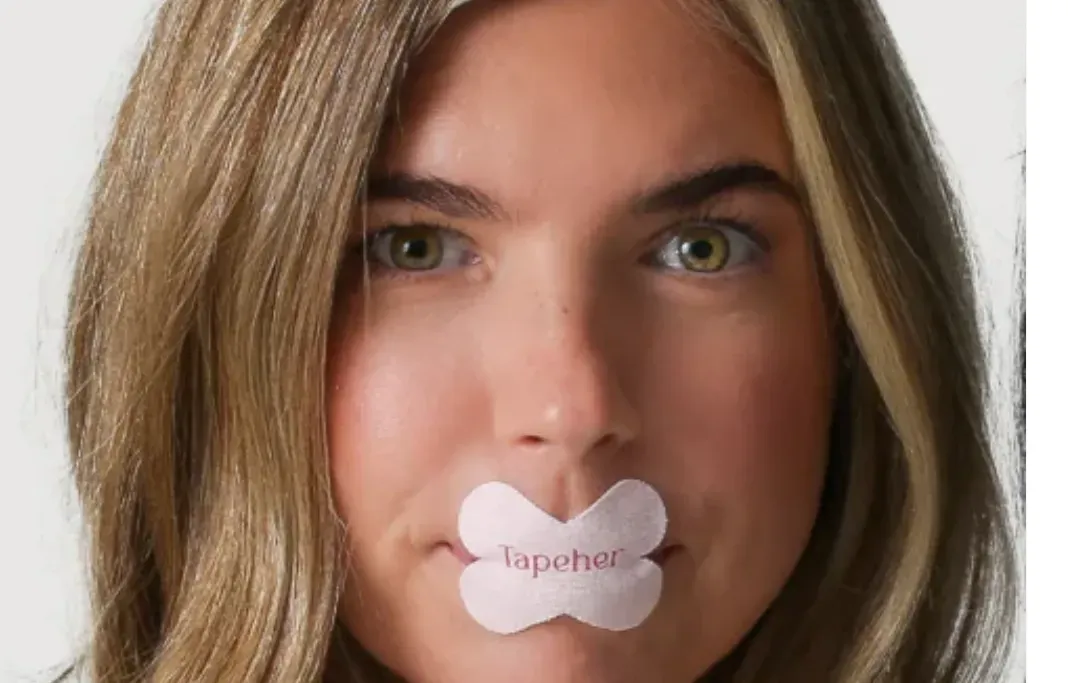
There is a product.
It is tape.
You stick it over your mouth while you sleep.
It costs up to $60 a month.
A roll of surgical tape is approximately £1.70 at Boots.
These are not the same tape.
One of them has BeardFlex™ technology.
The Science (The Real Part)
Before we proceed, an acknowledgment.
Nasal breathing is genuinely beneficial. This is documented and not in dispute.
When air enters through the nose it is filtered, warmed, and humidified. The nasal passages produce nitric oxide, which acts as a vasodilator, relaxing blood vessels and improving blood flow. Nasal breathing is associated with lower blood pressure, better sleep quality in certain patients, and reduced snoring.
This is real. This has been known since at least the 1950s, when Ukrainian physiologist Konstantin Buteyko began recommending nasal breathing to patients with chronic conditions.
The science supporting nasal breathing is solid.
What is considerably less solid is the science supporting a market worth hundreds of millions of dollars in branded adhesive strips as the mechanism for achieving it.
The Market
The mouth taping market is worth hundreds of millions of dollars and is growing at approximately 10% annually.
It contains multitudes.
Hostage Tape. Dryft Sleep. Dream Recovery. SomniFix. Tapeher. MyoTape. Better Mouth Tape.
Each brand offers its own proprietary approach to the ancient and complex technology of sticking something over your mouth.
Hostage Tape, whose name suggests a level of commitment its competitors have not yet matched, offers BeardFlex™ technology for users with facial hair and AirFlow™ technology for users who wish to continue breathing. It has sold 51 million strips.
Tapeher costs $60 a month and promises, among other benefits, a more chiselled jawline.
Dream Recovery uses organic bamboo silk and describes its product as helping Hard-Working people get the best sleep possible. The capitalisation of Hard-Working is unexplained but feels motivational.
The Jawline
Let us discuss the jawline.
Multiple brands in this category claim that mouth taping during sleep will improve, define, or chisel the jawline.
A 2025 review of studies on mouth taping, published in PLOS ONE, found that effects were minimal, uncertain, or potentially counterproductive.
The review did not find evidence of jawline improvement.
Neither did any other peer-reviewed study.
The Italian article on this subject is direct: the idea of a face lift for adults through mouth taping is not supported by scientific evidence and is used solely for marketing purposes.
You will recognise this gap between what is true and what is implied from elsewhere in these pages. It is the gap in which the wellness industry does most of its best work.
The jawline claim is not a feature.
It is a recruitment tool aimed at people who might not otherwise consider taping their mouth shut for eight hours.
It is also, as it happens, the same claim made by the face tape sold by Adhesiva vanitatis, which achieves the same non-result through the opposite mechanism, pulling the skin upward rather than closing the mouth, while you are awake rather than asleep.
The jawline remains elusive.
The tape continues to sell.
The Regulatory Architecture
Here is the detail that makes the entire market possible.
Mouth tape is classified as a wellness product, not a medical device.
This classification means manufacturers are not required to conduct clinical trials. They are not subject to stringent safety requirements. They are not regulated by the FDA with regard to the claims they make.
They can say almost anything.
And they do.
Improved jawline. Enhanced oxygenation. Deeper sleep. Better recovery. A more vibrant you.
None of these claims require evidence.
None of them have been evaluated by the FDA.
This is not a footnote in the small print.
It is the business model.
The Founder
The founder of Hostage Tape did not set out to build a mouth tape company.
He was, by his own account, keeping everyone up at night with his snoring. His wife moved to another bedroom. One fight led to two, then three.
Then he read about James Nestor's experiment on mouth breathing at Stanford.
That night, he taped his mouth shut with cheap tape.
He woke up the next morning and something felt different.
It took years of testing fabrics and adhesives.
Then came BeardFlex™.
Then came AirFlow™.
Then came 51 million strips.
His wife came back.
They remarried.
Mouth tape saved the marriage.
This is the origin story on the product website.
It is presented without irony.
The Risks (The Part the Marketing Does Not Lead With)
Doctors and the scientific literature are, in the words of the Italian review of this market, very cautious.
The 2025 PLOS ONE review found that studies on mouth taping systematically excluded subjects with nasal obstruction. This is significant because people with nasal obstruction are precisely the people most likely to breathe through their mouths and therefore most likely to try mouth tape.
If you have a blocked nose and tape your mouth shut, you have not solved your breathing problem.
You have created a more urgent one.
A 2024 study in JAMA Otolaryngology found that in patients who breathed primarily through the mouth, the tape significantly restricted airflow.
A 2023 study in Nature and Science of Sleep documented what happens in the worst cases. The cheeks puff outward during exhalation because the body attempts to expel air through the mouth even when it is sealed. The authors named this phenomenon mouth puffing. The more pronounced it was, the more severe the apnea.
Mouth puffing is a real clinical observation.
It has a name.
It occurs when someone has taped their mouth shut and their body disagrees with the decision.
The Language
A brief glossary:
"BeardFlex™ technology" - adhesive that sticks to facial hair. Previously known as strong glue.
"AirFlow™ technology" - a small hole that allows mouth breathing if necessary. This feature, present in a product designed to prevent mouth breathing, has not been explained.
"Wellness device" - a product category that exists outside FDA regulation and therefore outside the requirement to demonstrate that claims are true.
"Chiselled jawline" - a claim not supported by any peer-reviewed evidence, deployed here as a marketing tool for people who might not otherwise consider taping their mouth shut.
"Hard-Working" - capitalised, unexplained, aspirational.
"Mouth puffing" - what happens when the body attempts to breathe through a sealed mouth. A clinical phenomenon. Not mentioned in the product listings.
The Testimonials
"I have been using mouth tape for three weeks. My snoring has reduced. My sleep has improved. My jawline looks the same. I have ordered another month's supply." — Cordelia, 41, Nasally Optimised
"I applied the tape before bed. At 3am I woke with the strong sensation that my cheeks were attempting to leave my face. I have consulted the product FAQ. It does not mention this. I have emailed support." — Fenella, 38, Awaiting Response
"My wife suggested I try mouth tape to reduce my snoring. I tried it. My snoring reduced. My wife has since discovered that she also snores. I have purchased a second pack. The marriage is, on balance, improved." — Gerald, 67, Bilaterally Taped
Field Notes
The mouth taping market is not built on nothing.
Nasal breathing has real benefits. Some people with mild obstructive sleep apnea do snore less with mouth tape. The product, used appropriately by people without nasal obstruction, by people not taking sedatives, by people not at risk of vomiting, by people who can remove the tape independently, by people without heart conditions, by people without obesity, may provide modest benefit.
This is a considerable list of conditions.
It is also a considerably smaller claim than a chiselled jawline, enhanced oxygenation, deeper sleep, better recovery, and a more vibrant you.
The gap between what the science supports and what the marketing claims is where the hundreds of millions of dollars live.
The tape costs less than a penny per night to manufacture.
The branding costs considerably more.
The jawline costs nothing, because it is not included.
Advisory
If you encounter Occlusus oris mercator in the wild, do not be alarmed.
The nasal breathing benefits are real. The tape, used carefully and appropriately, may help some people with mild snoring.
If you have a blocked nose, do not tape your mouth shut. This is not a protocol. This is basic biology.
If you are considering mouth tape for sleep apnea, consult a doctor rather than a wellness device listing that has not been evaluated by the FDA.
If you are considering mouth tape for your jawline, note that the 2025 PLOS ONE review did not find evidence of this effect, and that a roll of surgical tape from Boots is £1.70 and will achieve the same jawline result as $60 a month of organic bamboo silk with BeardFlex™ technology.
Your mouth has been an acceptable backup breathing system for the entirety of human evolution.
It is, on balance, fine.
The BeardFlex™ was not necessary.